
Intro
Hitting a drum seems basic, yet studies reveal shared rhythm steadies body and mind. Group music therapy circles help people of any age manage stress without medication or gadgets. Inside the ring, hearts align to the pulse, telling nerves to settle down.
Leaders start by inviting an intention, a clapped pattern, and an easy groove. New members mention study aids like Writepaperforme while warming up, then notice looser shoulders and slower breaths.
Light talk mixed with sound makes the space friendly, welcoming, and low-pressure. No music background is required, which lowers fear and welcomes complete beginners. Short sessions fit into lunch breaks, school periods, or quick community gatherings. This accessible path offers relief that people can return to again and again.


What Is Group Music Therapy Drumming?
Table of Contents
Toggle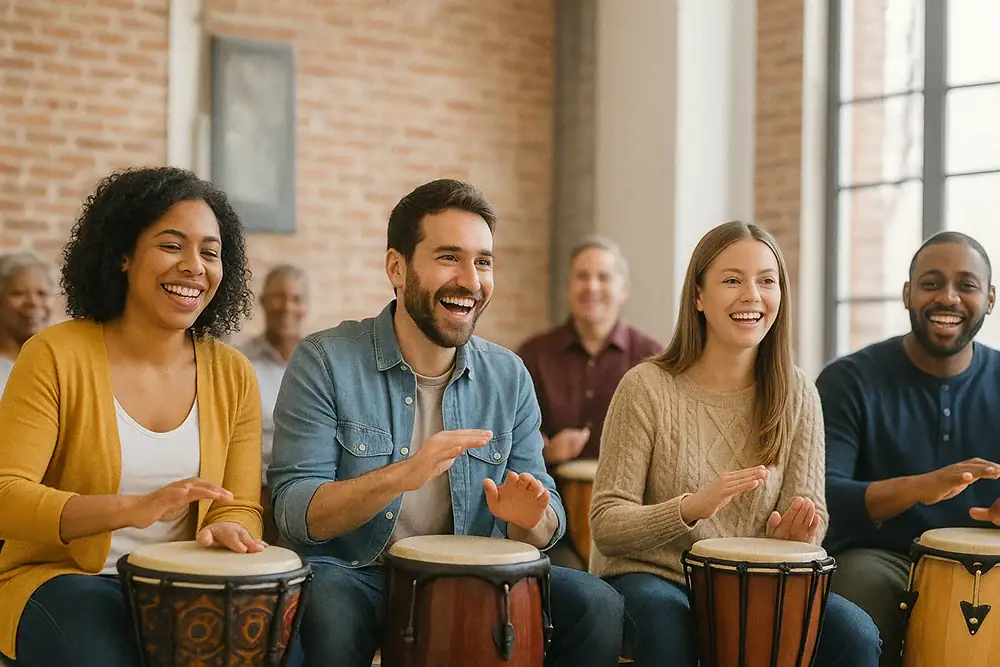
Group music therapy drumming is a guided practice led by a trained facilitator using simple percussion. Each rhythm supports a goal linked to health, not casual entertainment or free play.
The leader tracks breath, energy, and social signals, then adjusts volume and speed as needed. Meetings often open with brief mindfulness, followed by a call-and-response that helps first-timers feel capable.
Playing together removes the spotlight, easing performance nerves and building trust across the circle. The method blends ideas from brain science, counselling, and community music-making.
Researchers use the term entrainment to describe heart and brain rhythms syncing to repeated beats. This steady alignment can reduce cortisol, which the body releases during stress. Instruments may be djembes, frame drums, or improvised buckets and tubs with soft mallets.
The aim stays consistent across tools and settings. Create a supportive bed of sound where tension fades and a brighter mood rises.
How Drumming Reduces Stress: The Science
Modern scans help explain the calming pull of steady rhythm on the brain. Functional MRI work links drum patterns with activity in movement, touch, and reward circuits.
Dopamine pathways respond, which supports a felt sense of ease and pleasant focus. Repetitive hand strikes give the prefrontal cortex a simple task, crowding out worry loops.
Low tones travel through skin and bone and stimulate the vagus nerve. That nerve anchors the body’s rest-and-digest system, which slows heart rate and aids digestion.
One study showed a single 30-minute session cutting salivary cortisol by up to 25 per cent. Other trials reported blood pressure drops on par with a brisk, short walk. Playing in sync with others can raise oxytocin, which softens stress responses. Many channels work at once during a circle.
The result is fun, yet the biology behind it is meaningful and real.

Claim Your FREE 7-Day Trial
Unlock the tools and resources to make consistent progress in your own development as a drummer with The Drum Ninja Online Drum School platform today - click the button below to get started for FREE now.
Psychological Benefits Beyond Stress Relief
Benefits reach past stress control and touch many parts of daily life and work. Regular players report steadier moods and sharper focus across tasks and settings.
Holding a beat challenges executive skills, much like planks stabilise the body’s core.
Because each person matters, the circle builds purpose, competence, and a sense of value. Strong rhythms offer a safe outlet for anger, sadness, or bottled-up energy. Intense patterns stay controlled, so feelings move without conflict or harsh words. Teen groups often show higher self-esteem after six weekly meetings.
Older adults can see memory gains when rhythm becomes a steady part of their routine. Predictable tempos help people who are rebuilding a sense of safety after trauma.
Over time, these gains stack and travel home, to class, and to the office. People notice better coping during hard days and smoother recoveries after setbacks.
Social and Community Advantages
Shared drumming relies on listening, which builds care for the people beside you.
Participants match a common pulse, so attention and empathy grow with each measure. This quick bond often carries into talk before and after the session.
Workplaces report better teamwork after midday circles because staff practice nonverbal cues. Community centres use drum time to link residents across ages, cultures, and languages.
The instruments become a shared dictionary for people who have just met. Youth programs use circles to build positive group identity and reduce risky choices. Older adults value the belonging that eases isolation and brightens long afternoons. Research backs these observations with numbers on social ties.
Across eight weeks, many groups show clear growth in friendship networks.
The circle shifts focus from me to we and extends support beyond the room.
Physical Health Perks of Drumming Circles
Body gains are notable and pair well with the mental effects described above.
Repeated arm movement brings moderate aerobic work, near 250 calories per hour. That output matches a relaxed bike ride on flat ground for the same time. Striking with both hands strengthens coordination and fine-motor control in daily tasks.
Rhythmic cues also help regulate walking patterns used in stroke and Parkinson’s rehab. In one trial, grip strength improved about 15 per cent after ten weekly sessions. Immune shifts appear as well, including higher natural killer cell activity.
Deep vibrations act like a light massage that increases blood flow to hands and feet.
Muscles loosen, and stiffness melts as sessions progress and breaths slow down. Injury risk stays low because people self-set pace, volume, and time on the drum.
Seats, standing options, and adaptive tools keep the circle open to many bodies.
Evidence from Research Studies
Interest in drum circles has grown over two decades across labs and clinics. A 2016 review covering 42 studies found steady drops in anxiety with solid effect sizes.
Those gains matched results seen in widely used cognitive-behavioural programs. During exam week at Oxford, drumming beat silent reading for lowering perceived stress. Only the rhythm group kept a higher focus on later tests across the sample. Worksite data points in the same direction, with fewer sick days over six months. The number fell to around 20 percent among people who attended midday sessions. Benefits show up for children, teens, adults, and older adults in many settings.
Weekly rhythm lessons improved emotional control in elementary classrooms. Nursing homes reported reduced agitation when circles became part of the routine.
Sample sizes differ, yet the pattern repeats across age and context. Structured rhythm work supports both mind and body. Ongoing studies aim to refine the dose needed for lasting change.
Tips for Starting a Drumming Music Therapy Group
You do not need a studio or a big budget to start a strong circle. First, secure a room that tolerates moderate sound without bothering nearby spaces. Libraries often have meeting rooms with decent insulation and easy scheduling. Next, gather gear such as djembes, frame drums, shakers, or friendly substitutes.
In a pinch, use overturned bins or exercise balls placed on buckets with drumsticks. Plan for one drum per two people so hands can rest without stopping the groove. Invite a certified music therapist when possible to keep aims clear and achievable.
Open with grounding like deep breaths or humming to center the group. Start patterns simply, around 60 to 70 beats per minute in quarter notes. Encourage eye contact and name-based calls that build comfort and connection.
After 15 minutes, add soft-loud waves or tempo shifts to refresh attention. Close with a brief reflection so people can share what helped or challenged them.
Picking the Right Beats: From Calm Rhythms to the Best Music for Writing Essays
Choosing tempos and textures can fine-tune results for focus or relaxation goals.
Slow patterns near 60 beats per minute guide breathing and invite steady calm. For energy and drive, use mid-tempo grooves with light syncopation that stays clear.
Some leaders add recorded tracks under live drums to deepen the sound field. When groups need focus for tasks, softer handpan or slit-drum tones work well. Rhythms from playlists tagged as the best music for writing essays adapt nicely. Those grooves stay even, repeat easily, and avoid sudden jumps in volume. Exploring global styles such as West African, Latin, or Native American adds to learning. Variety keeps interest high without losing the simple core of the exercise.
Keep a clear downbeat so everyone can find the pulse and stay together.
Check with the group often to match sounds to changing emotional and thinking needs.
Conclusion: The Beat Goes On
From classrooms to clinics, rhythmic unity offers a practical, low-cost answer to stress. Group music therapy drumming combines movement, sound, and social contact in one joyful practice. Few tools let strangers speak without words and leave lighter in body and mood. Data points to shifts in hormones, brain patterns, and parts of the immune defence.
People also report new friendships and stronger confidence that carry into daily life. Instruments can be improvised, and plans fit many ability levels without barriers.
What you need is a welcoming guide and a shared wish to meet the downbeat. As organizations look for scalable mental health supports, drum circles stand ready. The oldest instrument still shows how to live well together through steady shared time.