
Intro
Drums aren’t just for rock bands and marching squads anymore, they might be one of the best tools a student can pick up on campus.
Whether it’s jazz sticks, hand percussion, or digital kits in your dorm room, rhythm can sharpen the brain, reduce stress, and turn downtime into progress. In the chaos of student life, drum practice might just be the most grounding thing you do all week.


Table of Contents
ToggleIt doesn’t matter if you’ve played before or just tapped rhythms on your desk out of boredom. Drumming teaches focus, coordination, emotional regulation and it’s wildly satisfying.
You don’t need a full kit or a soundproof room to make it work, either. For students just getting started, building strong fundamentals early can make a huge difference, especially when time is limited and practice needs to be efficient.
And when your schedule is already stretched between lectures, labs, and endless assignments, smart time management becomes essential. Knowing when to ask for academic support or temporarily reduce your workload can make the difference between burnout and balance.
For students looking for university assignment help, there are resources that are often used to stay on track during demanding academic periods. Creating even a small window of mental space can open up time to reset or to pick up the sticks and reconnect with rhythm.

The Brain on Drums: What Science Says
There’s growing research showing that drumming doesn’t just help people relax – it reorganizes the brain. In one 2020 study published in Brain and Behavior, participants who practiced drumming for two months showed changes in white matter structure in the corpus callosum – the bridge between the brain’s hemispheres.
Translation: drumming improves communication between logical and creative thought.
This aligns with broader research on music and cognition highlighted by the American Psychological Association, which links rhythmic activity to improvements in attention, emotional regulation, and stress reduction in academic environments.
That’s a big deal for students juggling heavy reading loads, creative projects, and problem-solving under pressure. Rhythm builds internal timing, sharpens memory, and forces you to stay present. Unlike music you can put on in the background, drumming pulls you into full-body awareness. It’s a mental workout with physical feedback – and that kind of engagement has real-world benefits.

Claim Your FREE 7-Day Trial
Unlock the tools and resources to make consistent progress in your own development as a drummer with The Drum Ninja Online Drum School platform today - click the button below to get started for FREE now.
How Drumming Helps You Be a Better Student
Here’s how regular drumming supports student life:
- Emotional regulation – After an argument or bad test grade, playing a simple beat for 15 minutes can reduce cortisol and reset your nervous system.
- Focus and attention – Drumming is a timing-based task. Your mind learns to track detail over time – great for note-taking, coding, or research.
Ryan Acton, essay writing service researcher and contributor to multiple student life studies, notes that physical rhythmic movement is one of the most overlooked forms of stress relief in college settings.
Not to mention the community that comes with it. Many university music departments, cultural groups, and even psychology classes include drum circles or percussion electives. These aren’t just hobbies – they’re low-pressure social anchors.
Making Room for Practice (Even If You're Slammed)
Time is the biggest obstacle for most student musicians. But you don’t need long sessions to make progress.
Here are a few realistic practice strategies:
- Use “dead” time – Practice during audio-only lectures, laundry cycles, or while waiting for dinner to cook.
- Micro practice – Break your drills into 5-7 minute bursts across the day. One set in the morning, one before bed.
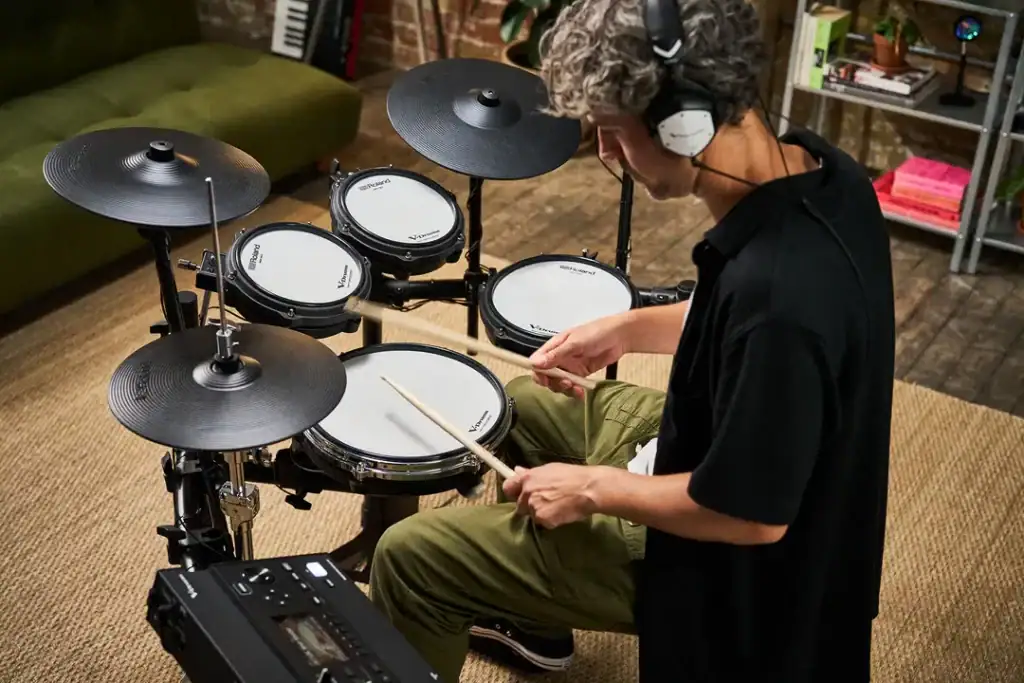
- Silent practice tools – A rubber pad or mesh head lets you work without disturbing anyone.
Short, focused sessions are often more effective than long, unfocused ones, especially for busy students. Learning how to practice drums efficiently helps maximize results even with limited hours.
Real Talk: Why It Helps Beyond College
Most people won’t become professional drummers. That’s not the point.
Drumming teaches a way of relating to time, frustration, and progress – all of which apply outside the music room. You learn how to pace yourself. You figure out how to push through mistakes without quitting. You get good at keeping rhythm when life throws off your tempo.
Those are skills employers love. So do mentors. So does your nervous system. And let’s be honest, it’s a cool thing to have on your dorm wall, your resume, or even your dating profile.
Plus, in the age of digital overwhelm, there’s something beautifully analog about picking up sticks and making real sound.
Even 15 Minutes of Rhythm Counts
If you’re a student who’s never played music before, this can feel intimidating. But drumming, especially hand percussion or beginner pad exercises, has one of the lowest entry barriers in music.
You don’t need to read notes. You don’t need a melody. You just need to feel the beat.
Apps like Beat Machine, YouTube tutorials by instructors like Stephen Taylor, and university-level beginner courses are all helpful. You can learn basic rudiments in a week and be playing along to your favorite tracks in a month.
Bonus Tip: Drumming Builds Community
Some of the best friendships are built outside lecture halls. Joining a student drumming group or attending local rhythm nights can connect you with people you’d never meet in your major.
And these connections often lead to unexpected opportunities – gigs, creative projects, collaborations, tutoring swaps, or shared accountability for staying on top of schoolwork.
In one case, a campus drum circle in Chicago ended up becoming a weekly study group that helped raise GPAs across five departments. It wasn’t about the drums, it was about creating a shared rhythm in life.
That kind of structure helps you stay motivated. It reminds you that you’re part of something, even on the rough weeks.
Summary
Drumming isn’t a luxury hobby. For students, it’s a mental tool, a social anchor, and a gateway to balance.
Whether you’re tapping out beats on a pad or finding your groove in a dorm band, rhythm will meet you where you are and help you get where you’re going.
Let it be yours.