


Quick Recommendations

Jump to What You Need
5 picks · every budget · personally tested by Diego Cardini
Image
Our Pick
Use Case
Buy


FEATURED ON


Best for Apartments

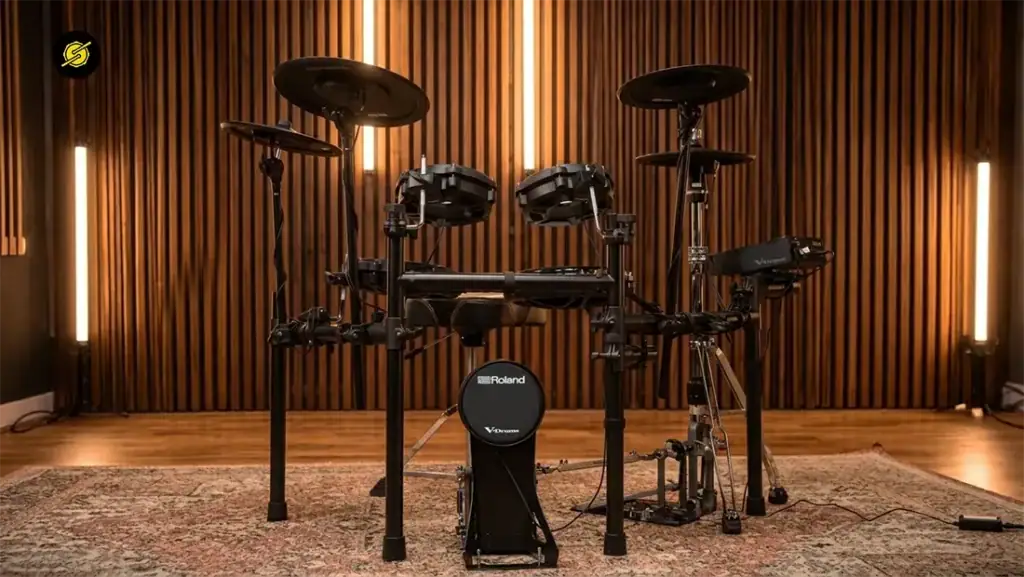
Roland
VQD106
The only electronic drum kit ever designed from the ground up specifically to solve the apartment noise problem. Every single component — pads, cymbals, kick pad, pedal bases, rack feet — was re-engineered with one goal: eliminate the noise before it reaches your neighbor.
Score Breakdown
9.4 / 10
Noise Level
10/10
Up to 75% quieter than a conventional V-Drums kit. Nothing else on this list comes close. Every component — pads, cymbals, kick pad, pedal bases, rack feet — was re-engineered to eliminate vibration transfer before it reaches the floor.
Pad Feel
9/10
Honeycomb rubber mesh hybrid — spongier than standard Roland mesh but fully tensionable and genuinely responsive. Real owners describe the rebound as natural and comfortable for long practice sessions.
Sound Module
8/10
TD-07 module: solid but entry-level. Great for practice and coaching, with Bluetooth and USB audio built in. Ceiling for performance use — no extra trigger inputs for expansion beyond the included configuration.
Build Quality
9/10
Purposeful engineering throughout. Every component was chosen specifically to minimise vibration transfer — not assembled from existing parts. The rack, feet, and pad mounts all reflect the noise-reduction brief in their construction.
Connectivity
8/10
Bluetooth audio and MIDI, USB audio interface, headphone out, and aux in. Melodics for V-Drums included. No extra trigger inputs limits expansion — what comes in the box is what you get.
Portability
9/10
Compact rack and kick tower design with no boom stands required. Genuinely small-space friendly — takes up less floor area than any conventional kit configuration and sets up in 30–40 minutes from the box.
Value
9/10
You're paying for genuine noise engineering, not a standard kit with quieter pads. For apartment drummers who've been told they can't play at home, that engineering is worth every dollar — no other kit on this list solves the problem this completely.
Beginner Friendly
9/10
TD-07 coaching tools, Melodics for V-Drums, and an intuitive layout make this one of the most beginner-accessible kits on this list. Sets up logically in 30–40 minutes — experienced drummers and complete beginners both report a smooth first session.

Best All-Around Kit
Roland
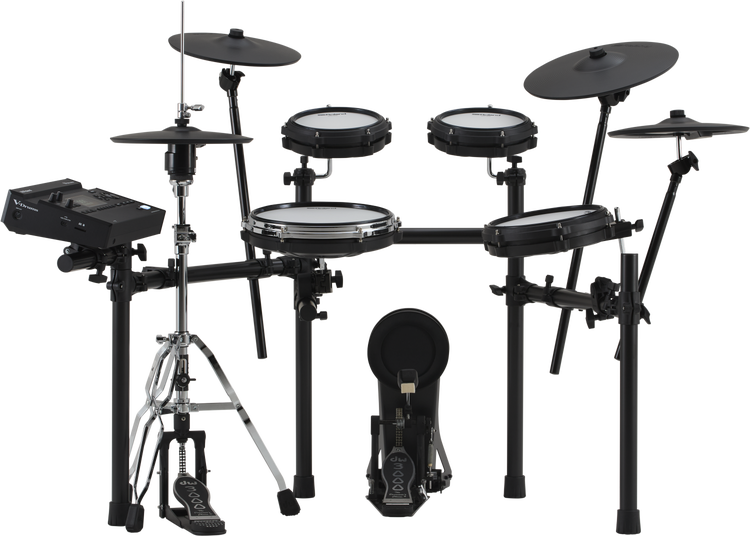
TD316
The apartment kit for the drummer who refuses to compromise on being a real drummer. Flagship V31 sound engine, positional sensing snare, stand-mounted hi-hat — all in a compact rack that produces measurably less floor vibration than any full-shell kit on this list.
Score Breakdown
9.1 / 10
Noise Level
9/10
KD-10 kick pad delivers the lowest floor vibration of any non-VQD kick solution on this list. Mesh heads throughout keep impact noise well below any rubber pad alternative. Not as engineered as the VQD106 — but the best standard V-Drums noise profile available.
Pad Feel
9/10
PD-12P snare with positional sensing and brush support — a genuine upgrade from entry-level Roland pads. VH-10 stand-mounted hi-hat responds to foot pressure and opens and closes like a real hi-hat. The playing feel on this kit is meaningfully better than anything below it on this list.
Sound Module
10/10
V31 module — the same sound engine as Roland's flagship V71. Not a junior version, not a simplified derivative. The real thing, at mid-range pricing. 6 months of Roland Cloud Ultimate included, adding hundreds of additional kits and sounds from day one.
Build Quality
8/10
Compact MDS-4V rack with solid Roland construction throughout. Punches noticeably above its price on build quality. The rack is stable, the cable routing is logical, and nothing feels temporary — this is built to last through years of regular practice.
Connectivity
8/10
One digital pad input for future upgrades, coaching tools, Roland Cloud integration. No direct outputs is the honest limitation — for home recording and practice it's never a problem, but gigging players who need individual outs will notice the gap.
Portability
9/10
Compact MDS-4V rack takes up noticeably less floor space than the VAD series or Alesis Strata Core. Sets up in 30–40 minutes with logical cable routing. A genuine fit for small rooms and apartments where every square foot matters.
Value
9/10
Flagship V31 sound engine at mid-range pricing. The VH-10 hi-hat alone represents serious value — a stand-mounted hi-hat at this price point is not standard. 6 months of Roland Cloud Ultimate adds hundreds of additional kits without additional spend.
Beginner Friendly
9/10
Coaching tools, Roland Cloud content, and intuitive module navigation make this approachable for complete beginners — while the positional sensing snare and flagship sound engine mean experienced players won't outgrow it quickly. Sets up in 30–40 minutes from the box.
Best Sound Quality
Alesis
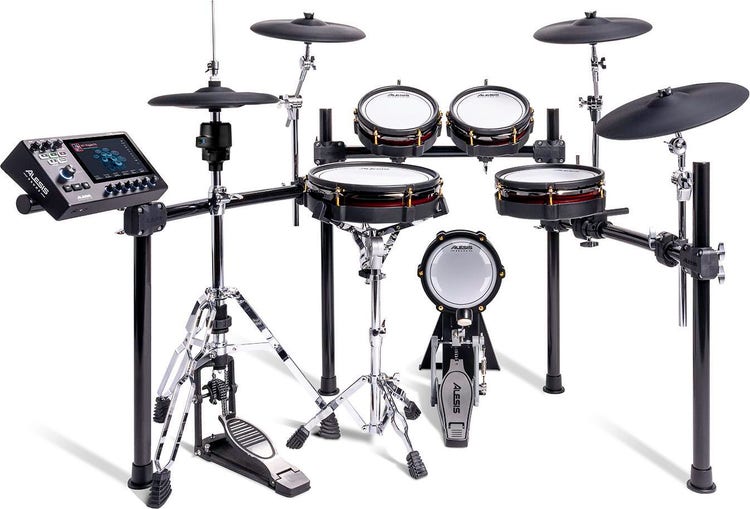
Strata Core
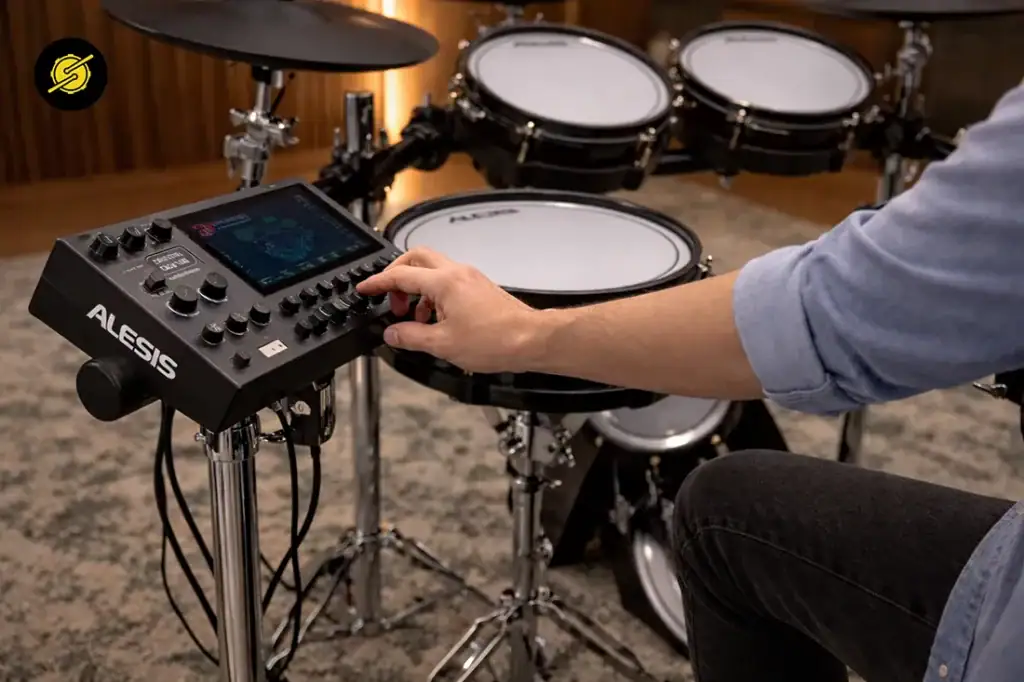
The apartment kit for the recording drummer. A 30% smaller footprint than the flagship Strata Prime, an 8-inch kick tower instead of a full-size shell, the same BFD3 sound engine, a 7-inch touchscreen module, and sounds that make you forget you're wearing headphones.
Score Breakdown
8.9 / 10
Noise Level
8/10
Mesh heads throughout and an 8-inch kick tower keep floor vibration low. ARC cymbal surfaces have a slight audible strike — not silent. Better than any rubber pad kit but not as engineered as the VQD106 or TD316's KD-10 solution.
Pad Feel
8/10
Anti-hotspot mesh pads play consistently across the full surface. The 12-inch snare is large for the price. The active magnetic hi-hat is a genuine standout — responds to foot pressure and playing position with accuracy that rivals more expensive alternatives.
Sound Module
10/10
BFD3 engine — 25GB of samples, 144,000 individual samples, 75 preset kits. The best-sounding module in this price range, full stop. Controlled via a 7-inch touchscreen that makes navigation faster and more intuitive than any button-and-knob alternative on this list.
Build Quality
8/10
Sturdy 4-post steel rack holds everything securely in a compact footprint. ABS clamps are functional and reliable but feel less premium than Roland's hardware at a comparable price point. Built for regular home use — not for touring.
Connectivity
9/10
Bluetooth MIDI and audio, USB MIDI, 7-inch touchscreen interface, 90-day Drumeo access, and BFD Player app included. One of the most connected apartment kits on this list — everything a recording and practice-focused drummer needs is present from day one.
Portability
9/10
30% smaller footprint than the Strata Prime. 8-inch kick tower replaces an 18-inch shell. Steel rack with a low side profile. Ships in one box and assembles in 45–55 minutes. A genuine apartment-first footprint from a kit that doesn't compromise on sound.
Value
10/10
BFD3 engine at this price, in a compact footprint specifically designed for small spaces, is exceptional value. 25GB of samples and a 7-inch touchscreen at a mid-range price is not something you find on any other apartment kit. The sound quality-to-price ratio here is the best on this list.
Beginner Friendly
9/10
7-inch touchscreen makes navigation fast and approachable for players of any experience level. 90-day Drumeo access provides structured lessons from day one. Ships in one box and assembles in 45–55 minutes without specialist knowledge.
Best Compact Footprint

Yamaha
DTX6K3-X
Yamaha's TCS pads are unlike anything else in electronic drumming — silicone gel construction that produces less airborne noise than mesh and feels softer on joints over long sessions. The RS6 rack is one of the most compact full-featured frames available. The DTX-PRO module sounds exactly like a Yamaha acoustic kit should.
Score Breakdown
8.5 / 10
Noise Level
8/10
TCS pads produce less airborne noise than mesh — a genuine advantage in apartments. The KP90 kick tower produces more floor vibration than the KD-10 or VQD kick solutions — an isolation pad is not optional here, it's a requirement before your first session.
Pad Feel
9/10
Textured Cellular Silicone is a unique playing surface — natural rebound, forgiving under the stick, and noticeably easier on wrists and joints over long sessions than mesh alternatives. Drummers who practice for hours report significantly less fatigue on TCS than on any other pad material at this price.
Sound Module
9/10
DTX-PRO module: 70 Yamaha-sampled kits with Kit Modifier knobs for real-time sound shaping. The acoustic authenticity of the Yamaha samples is the standout — this module sounds specifically like a Yamaha acoustic kit in a room, and that distinct character is something no other module on this list replicates.
Build Quality
9/10
RS6 rack is lightweight, sturdy, and genuinely compact. Yamaha hardware quality is class-leading at this price — the rack clamps, pad arms, and cymbal mounts all feel solid and hold position session after session. Nothing wobbles, nothing loosens with regular use.
Connectivity
8/10
40+ preset kits, 200 custom kit slots, 400+ sounds, 37 play-along tracks, and a Cubase AI license included. The DTX pad wizard configures the kit automatically on first setup. Solid connectivity for practice and home recording — not designed for live performance output.
Portability
10/10
RS6 rack is the most compact full-featured rack frame on this list. Left side open for hi-hat stand and double pedal positioning. Genuinely small-space friendly — takes up less floor area than any other full-configuration kit on this list without compromising the playing layout.
Value
8/10
Hi-hat stand included — unlike most competitors at this price. Good feature-to-price ratio overall. Less competitive purely on noise reduction versus the VQD106 or TD316. The TCS pad material and RS6 rack are where the value is concentrated — both are genuinely premium for the price.
Beginner Friendly
8/10
DTX pad wizard walks you through configuration automatically on first setup. 37 play-along tracks and Cubase AI are useful from day one. First assembly takes about 60 minutes with clear cable labeling throughout — manageable for any skill level with the included documentation.

Best for Beginners

Alesis
Nitro Pro
The beginner kit that doesn't sound like one. BFD-powered module with 500+ multi-velocity samples, chokeable cymbals on all three pads, and mesh heads throughout — at a price point where the sounds are genuinely musical, not just functional.
Score Breakdown
8.2 / 10
Noise Level
8/10
Mesh heads throughout keep impact noise low across the kit. Compact kick tower keeps floor vibration manageable — a basic isolation pad handles the rest. Not as engineered as the VQD106 or TD316, but effective for standard apartment situations with a riser in place.
Pad Feel
7/10
Mesh heads play well and respond naturally. Fixed hi-hat and dual-zone snare are appropriate at this price — not limitations, just context. A beginner learning fundamentals will find the feel comfortable and consistent. The fixed hi-hat is the one area where advanced technique development is constrained.
Sound Module
9/10
BFD-powered module with 500+ multi-velocity samples and 36 factory kits. Genuinely musical at this price point — the sounds respond to dynamic variation in a way that cheap drum modules don't. Through headphones in an apartment, this module makes practice sessions feel real rather than mechanical.
Build Quality
8/10
Full-size steel rack — a meaningful durability upgrade over the aluminum frames found on competing beginner kits. Kit spacing suits tall drummers who find compact entry-level rack configurations cramped. Built for years of regular home use at a price that doesn't usually deliver this level of rack construction.
Connectivity
8/10
Chokeable cymbals on all three pads, double kick compatible, 90-day Drumeo access, and BFD Player app included. Everything a beginner apartment drummer needs is present from day one — structured lessons, expandable sounds, and natural cymbal choke response without additional purchases.
Portability
8/10
Compact steel rack with a smaller overall footprint than mid-range kits. Fits comfortably in a bedroom or studio apartment practice space without dominating the room. The full-size steel rack adds some weight compared to aluminum alternatives but the footprint remains apartment-friendly.
Value
10/10
BFD module, mesh heads throughout, chokeable cymbals on all three pads, kick pedal included, hi-hat pedal included, steel rack, sticks, cables, drum key, 90-day Drumeo, and BFD Player — at this price, the complete package is genuinely hard to beat. No other kit on this list delivers this much usable hardware and software at this price point.
Beginner Friendly
9/10
Everything needed to play is in the box — sticks, cables, kick pedal, hi-hat pedal, drum key. Assembles in 25–30 minutes with a clear, beginner-friendly manual. 90-day Drumeo provides structured lessons from the first session. The most complete out-of-the-box experience on this list.
