Best Double Bass Pedals

Ready to unlock a whole new side of your playing?

The right double bass pedal feels like an extension of your foot, fast, responsive, and effortless across rock, prog, metal, and beyond. These are the 7 best on the market right now.

Short on time? The DW MDD Machined Direct Drive is my top pick — the smoothest, most responsive double pedal for serious drummers in any style. → See it on Sweetwater

My Picks For The
Best Double Bass Pedals:

Quick Recommendations
Jump to What You Need
7 picks · every budget · personally tested by Diego Cardini
Image Our Pick Use Case Buy
DW MDD Machined Direct Drive
01 / 07
DW MDD Machined Direct Drive
Top Pick
Best For
Best Overall
Trick Drums Pro 1-V Bigfoot
02 / 07
Trick Drums Pro 1-V Bigfoot
Best For
Editor's Choice
DW 9000 Series Extended Footboard
03 / 07
DW 9000 Series Extended Footboard
Best For
Best Longboard
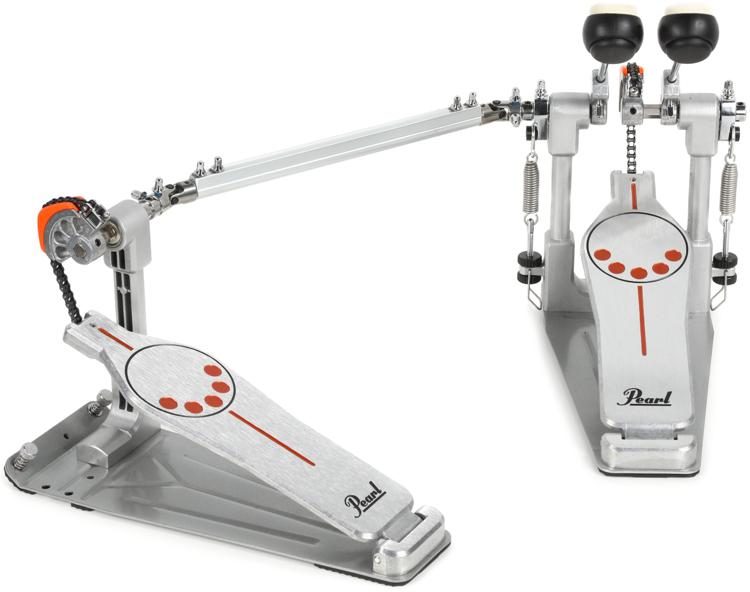
Pearl Demon Drive P-3002D
04 / 07
Pearl Demon Drive P-3002D
Best For
Best for Speed
Tama HP910LWN Speed Cobra
05 / 07
Tama HP910LWN Speed Cobra
Best For
Best Price-to-Value
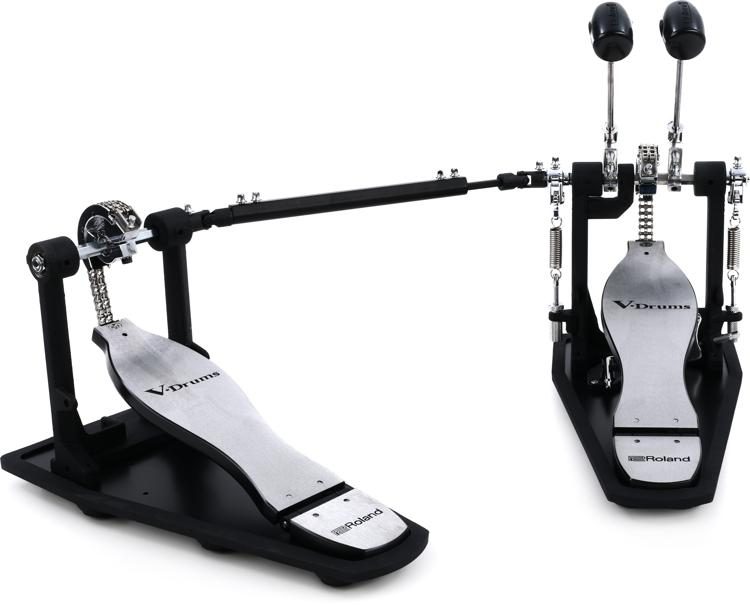
Roland RDH-102A Noise Eater
06 / 07
Roland RDH-102A Noise Eater
Best For
Best for E-Kits
Pearl P932 Longboard
07 / 07
Pearl P932 Longboard
Best For
Best Budget

FEATURED ON

FEATURED ON

The 7 Best Double Bass Pedals

Editor's Pick
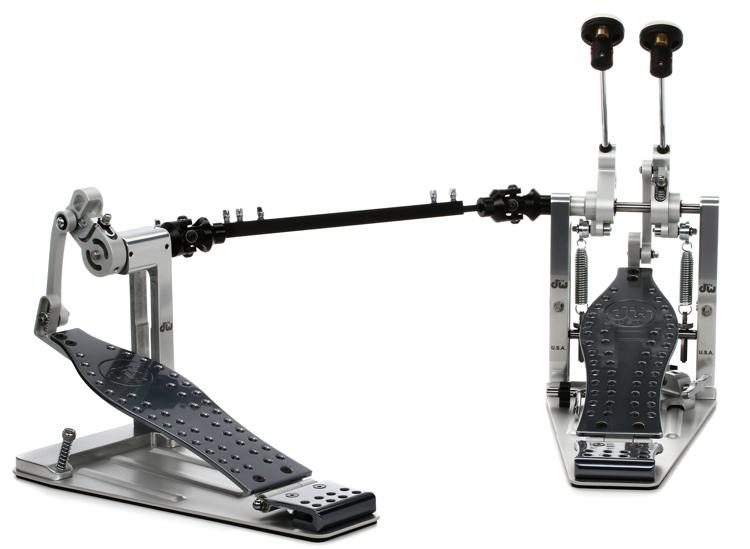
DW MDD Machined Direct Drive Double Bass Pedal
DW — Drum Workshop
MDD Machined Direct Drive
4.9
#1 Editor's Pick
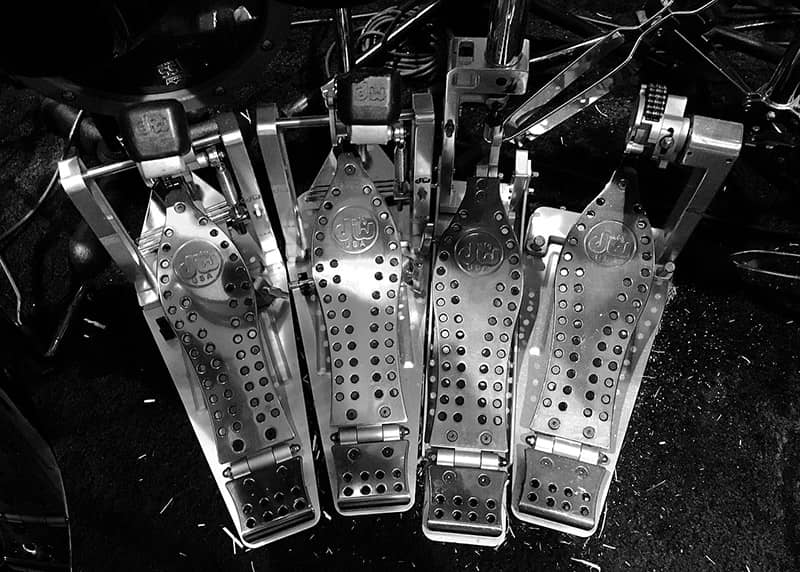
The go-to direct drive double pedal for any style of music. Perforated aluminum footboards, contoured heel plates, and DW's signature ultra-smooth action — solid, heavy, and loaded with customization options that will last decades of hard playing.
Score Breakdown
9.7 / 10
Build Quality
9.9/10
Solid and heavy — that weight is a feature. These pedals stay put no matter how hard you play.
Performance
10/10
Smooth, fast direct drive action that suits every style — from jazz to blast beats.
Feel
9.8/10
Perforated aluminum footboards with contoured heel plates create an exceptionally natural platform.
Speed
10/10
Direct drive eliminates all lag. Instant response from slow grooves to blast beats.
Stability
10/10
Heavy machined construction — zero creep on the floor even during the most aggressive playing.
Customization
9.5/10
Beater angle, spring tension, footboard height — adjustable for any technique or preference.
Durability
9.9/10
Machined aluminum throughout. Built to handle decades of heavy use without degradation.
Value
9.2/10
Premium price — but the build quality and longevity make it a long-term investment, not a cost.
Pros / Cons
Direct Drive Action Aluminum Footboards Contoured Heel Plates Many Customization Options Heavy & Stable Suits Any Playing Style No Cons Noted
DW Direct Chain - Best Double Bass Pedal

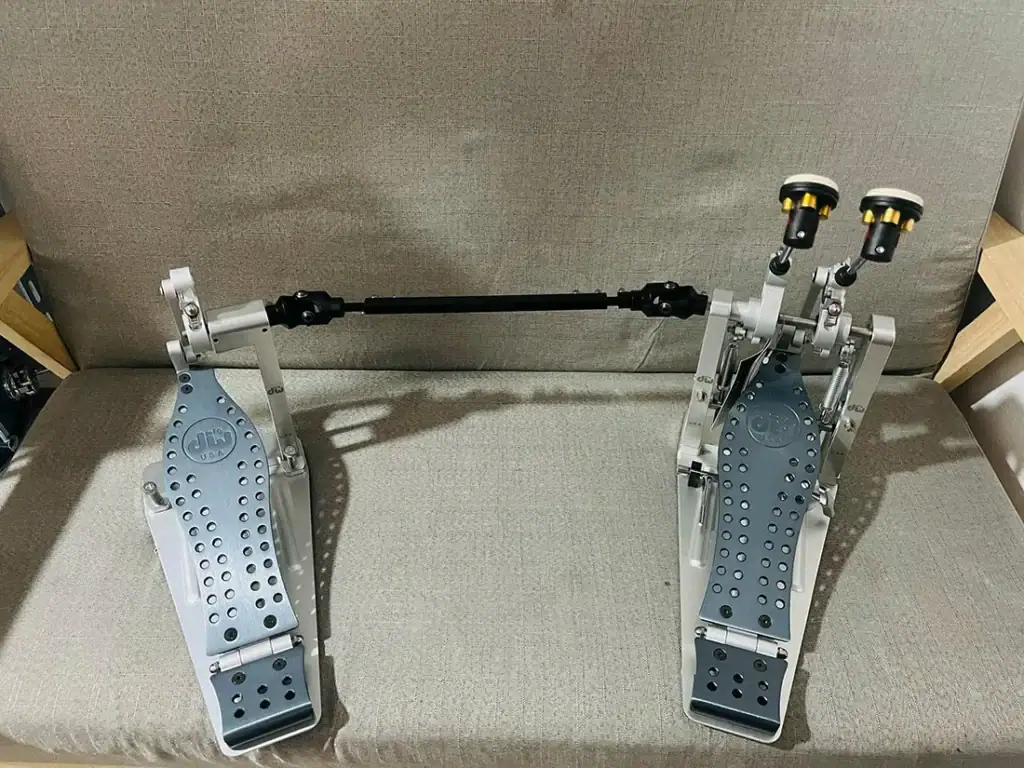
DW’s MDD Machined direct drive pedals are loaded with great design features. The action is very smooth thanks to the innovative technology from DW. The footboards are perforated aluminum and have contoured heel plates, creating a solid base to play from. Everything else on the pedals is a minor detail that can be adjusted. 

These things are surprisingly heavy. However, you don’t feel the weight when you play, making the heaviness a huge bonus as they’ll never move around. They have a robotic aesthetic thanks to the aluminum footboards with holes. This is quite unique and loved by many drummers. 

Overall, they’re a great choice if you’re looking for a pair of direct drive pedals. If you haven’t played on some before, these are where you should start. 

If you want to learn more about this doubles pedal check our guide here. 

+
Pros
Things we liked
+
Solid and heavy build that stays planted — the weight works in your favor
+
Many customization options to dial in your perfect feel
+
Excellent entry point into direct drive pedals — smooth, responsive action
Cons
Things we didn't like
No notable cons — this pedal earns its top spot on the list
Most Innovative
Trick Drums Pro 1-V Bigfoot Double Bass Pedal
Trick Drums
Pro 1-V Bigfoot
4.8
Most Innovative
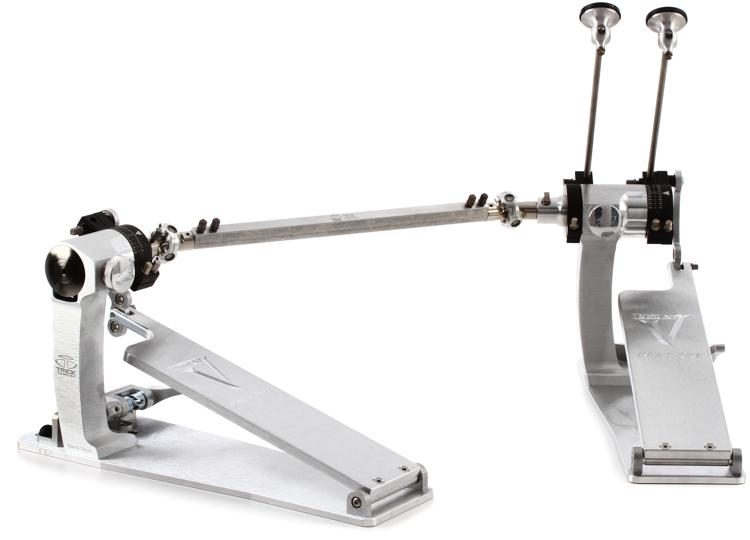
Your kick pedal, reinvented. The Bigfoot's internal compression-spring mechanism is smoother and quieter than any expansion-spring pedal on the market — paired with a split-cam design that lets you adjust beater angle and pedal angle completely independently.
Score Breakdown
9.6 / 10
Build Quality
9.8/10
Precision-machined components throughout. Built to the same standard as professional studio gear.
Performance
9.8/10
Compression-spring action is in a league of its own — smooth, fast, and remarkably consistent.
Feel
9.9/10
Exceptionally comfortable underfoot. The split-cam design dials in a feel that's uniquely yours.
Noise
9.5/10
Compression-spring mechanism is significantly quieter than standard expansion-spring pedals.
Customization
10/10
Split-cam lets you adjust beater and pedal angles independently — a feature found on no other double pedal.
Setup
7/10
Steep learning curve — the wealth of adjustments takes time to fully understand and dial in.
Value
9.4/10
Premium price justified by the engineering innovation and the level of feel it delivers.
Durability
9.8/10
Trick Drums are known for bulletproof construction. This pedal is built to outlast your career.
Pros / Cons
Compression-Spring Mechanism Split-Cam Design Independent Beater Adjustment Very Comfortable Quieter Than Standard Pedals Bulletproof Build Steep Learning Curve

The Bigfoot pedal is an excellent product from Trick Drums. It has so many innovative design features that are beneficial to drummers of all levels. One standout point is the internal compression-spring mechanism. It’s a lot smoother and quieter than expansion-spring pedals. 

It has a split-cam design that allows you to adjust the angle of the beaters and angles independently. This is not something that you see on many double pedals, so it’s a great feature. 

In terms of build, playability, design, and comfort, these pedals are a fantastic choice. One downside is that it will take a fair amount of time to learn how all the adjustments work. 

Check our dedicated buying guide if you want to know more about this double pedal. 

+
Pros
Things we liked
+
Split-cam design lets you adjust beater angle and pedal angle independently — rare on any double pedal
+
Internal compression-spring mechanism is noticeably smoother and quieter than standard expansion-spring designs
+
Very comfortable to play — build quality and ergonomics are top tier
Cons
Things we didn't like
Steep learning curve — the many adjustment options take time to fully understand and set up correctly
Best Longboard
DW 9000 Series Extended Footboard Double Bass Pedal
DW — Drum Workshop
9000 Series Extended Footboard
4.8
Best Longboard
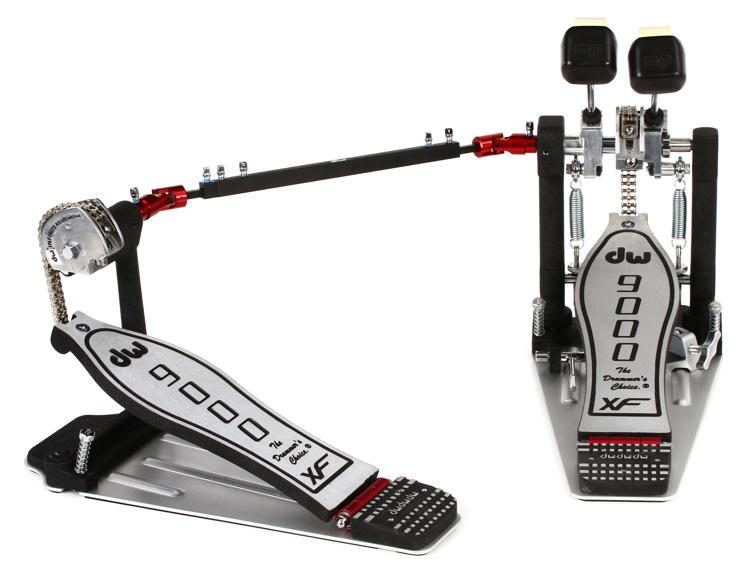
The world's most iconic double pedal, now with an extended footboard. The DW 9000 Series is a legend for a reason — aircraft-grade aluminum, the EZ Infinite Adjustable Cam, Tri-Pivot toe clamp, and a buttery-smooth feel that makes fast patterns effortless.
Score Breakdown
9.6 / 10
Build Quality
9.8/10
Aircraft-grade aluminum assemblies built entirely in-house. One of the most durable pedals ever made.
Performance
9.7/10
Plays like butter. The EZ Infinite Adjustable Cam handles the fastest double bass patterns with ease.
Feel
9.8/10
Extended footboard gives extra room underfoot — a game changer for heel-toe players.
Stability
9.9/10
Steady rubber base plate and Tri-Pivot toe clamp keep it locked to the bass drum no matter what.
Customization
9.7/10
EZ adjust cam, beater angle, spring tension — all dialed in quickly with no tools required.
Setup
9.2/10
Straightforward assembly. Longboard preference is personal — consider the standard 9000 if unsure.
Value
9.5/10
A proven legend at a fair price. You're buying decades of DW engineering refinement.
Durability
9.8/10
Built to survive touring and heavy studio use. The 9000 Series has a reputation for outlasting everything.
Pros / Cons
Extended Footboard EZ Infinite Adjustable Cam Tri-Pivot Toe Clamp Aircraft-Grade Aluminum Rubber Base Plate Very Stable Comfortable to Play Longboard Not for Everyone
1

Moving onto the double pedal that we all know and love, the DW 9000 Series from Drum Workshop. However, this particular version has an extended footboard, going you more room at the feet. The 9000 Series is arguably one of the most well-known pedals in the world, and this version packs all the same features. 

I also picked the 9500D from DW as the Best Hi hat stand in our buying guide. These two complement each other perfectly. 

With its Tri-Pivot toe clamp system, EZ adjust cam, and steady rubber base plate, this pedal is ready to take on the fastest double bass drum patterns out there. The pedals play like butter, having a super smooth feel that will make any drummer comfortable. 

Longboard pedals aren’t everyone’s cup of tea. So, if you love the features but aren’t a fan of longboards, consider getting the standard DW 9000 double pedal

+
Pros
Things we liked
+
Extended footboard gives you extra room underfoot compared to the standard DW 9000
+
Rock-solid stability — the rubber base plate keeps everything locked in place during intense playing
+
Plays like butter — one of the smoothest feeling pedals on the market
Cons
Things we didn't like
Longboard footboards won't suit every drummer — those who prefer a standard board length may want the regular DW 9000 instead
Fastest Feel
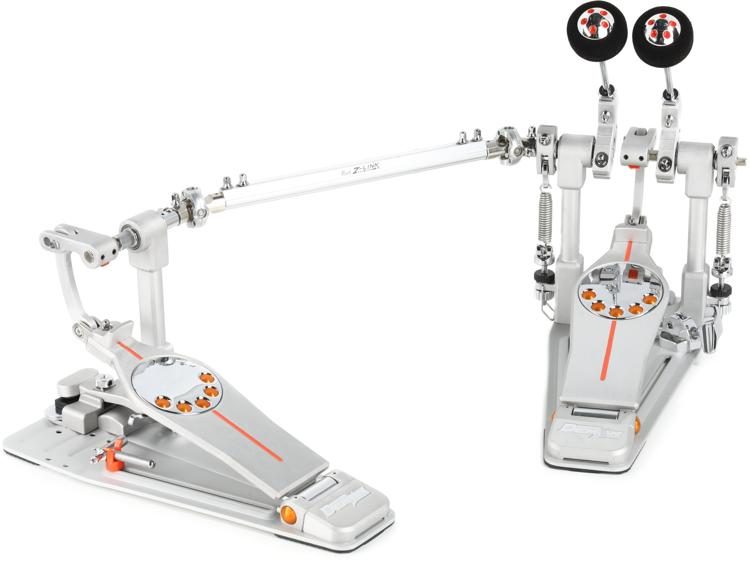
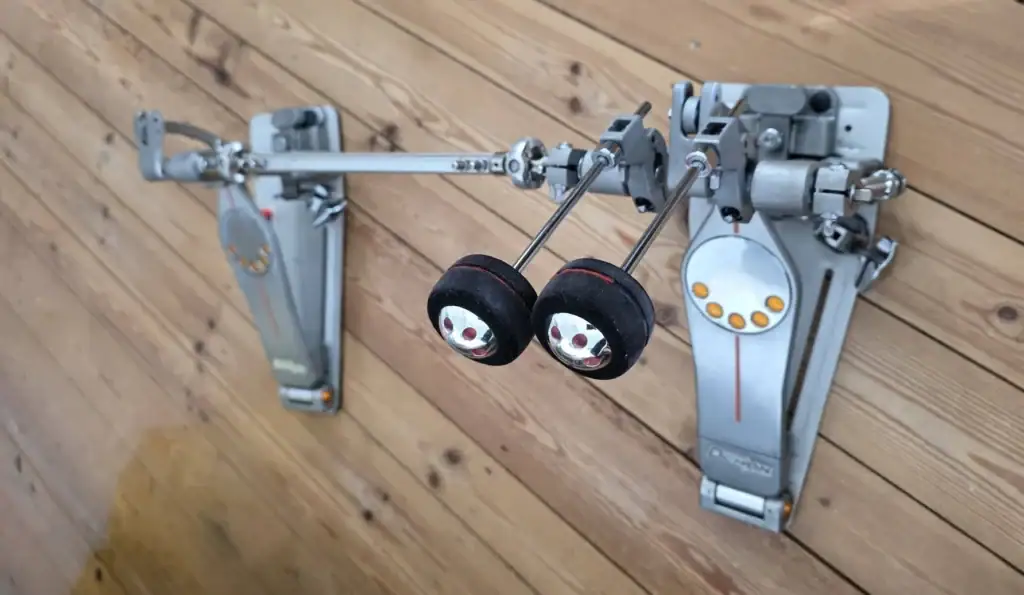
Pearl Demon Drive P-3002D Double Bass Pedal
Pearl
Demon Drive P-3002D
4.7
Fastest Feel
Pearl's answer to speed. Ninja skateboard bearings slash friction to a minimum, making the Demon Drive one of the fastest double pedals on the market. Add convertible short-to-longboard footboards, Z-Link U-Joints, and a carry case — and you have a complete package.
Score Breakdown
9.4 / 10
Build Quality
9.5/10
Solid construction with Z-Link U-Joints on the driveshaft for a tight, rattle-free connection.
Performance
9.4/10
Ninja skateboard bearings make this one of the lowest-friction, highest-speed pedals available.
Feel
9.5/10
Convertible footboards let you switch between shortboard and longboard to match your technique.
Speed
9.8/10
Among the fastest pedals on the market thanks to drastically reduced bearing friction.
Customization
9.3/10
Convertible footboards, adjustable beater angle, and spring tension cover most preferences.
Portability
9.0/10
Includes a carry case — though the pedal needs to be disassembled to fit inside it.
Value
9.5/10
Carry case included, convertible footboards, Ninja bearings — excellent package for the price.
Durability
9.4/10
Pearl's build quality is consistently reliable. The Demon Drive is made to handle heavy, regular use.
Pros / Cons
Ninja Skateboard Bearings Z-Link U-Joints Convertible Footboards Includes Carry Case Ultra-Low Friction Great for Speed Must Disassemble for Case

Pearl is know to produce top notch products and here we have another classic double pedal to add to the list, Pearl’s Demon Drive pedals are highly popular amongst double pedal drummers. The most unique thing about them is that they use Ninja bearings that are mostly designed for skateboards. These bearings lower the friction of the pedals significantly, meaning they’re some of the fastest pedals on the market. 

Another great feature is the ability to convert the footboards from shortboards to longboards. Overall, this is a solid double bass pedal that would be a great option for anyone. It even comes with a carry case. You’d just need to disassemble to pedal to make it fit in the case. 

+
Pros
Things we liked
+
Ninja skateboard bearings drastically reduce friction, making these some of the fastest pedals on the market
+
Convertible footboards switch between shortboard and longboard to suit your preference
+
Comes with a carry case included out of the box
Cons
Things we didn't like
The pedal needs to be disassembled to fit inside the carry case — not the most convenient solution
Best Intermediate
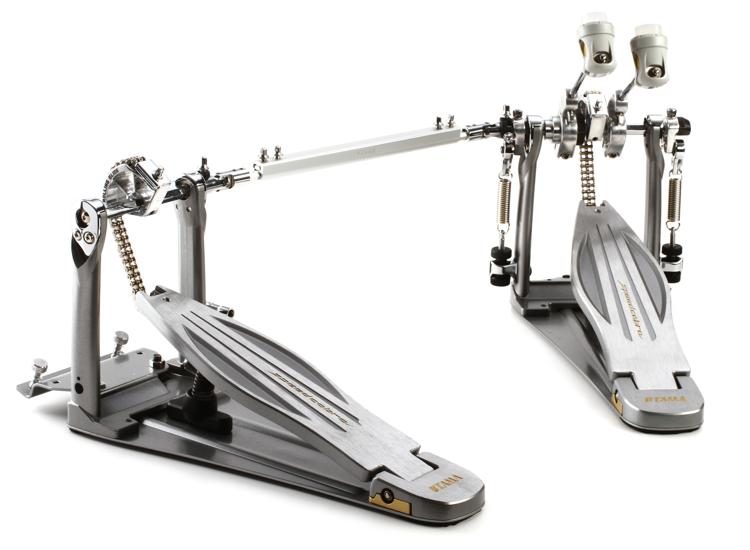
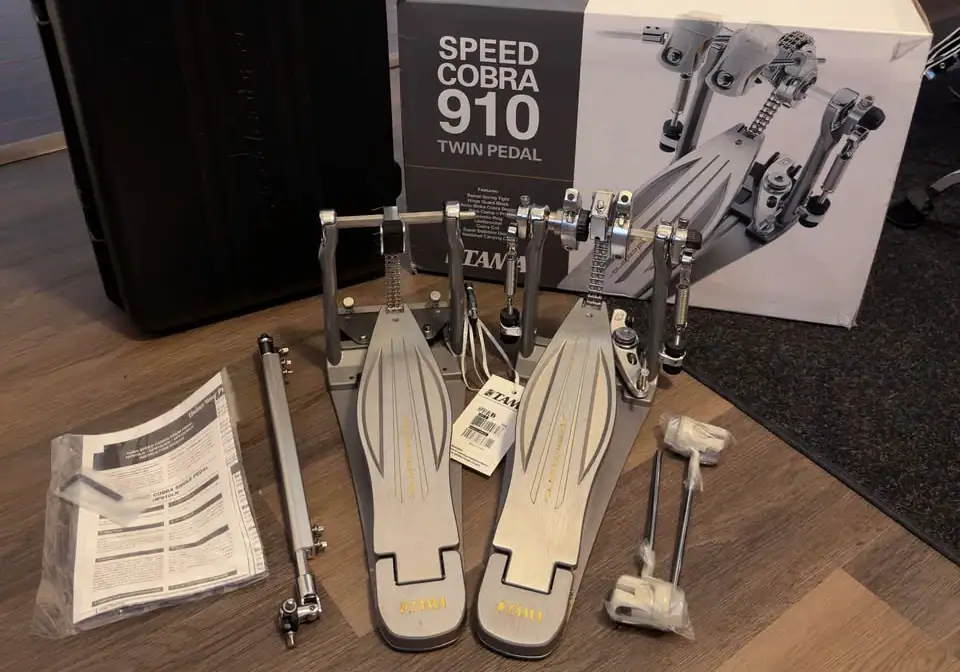
Tama HP910LWN Speed Cobra Double Bass Pedal
Tama
HP910LWN Speed Cobra
4.5
Best Intermediate
The sweet spot between price and performance. Tama's Cobra Coil mechanism snaps the pedal back after every stroke, and the Para Clamp II Pro keeps it flat on the floor — packed with customization options that punch well above its price tag.
Score Breakdown
9.0 / 10
Build Quality
9.0/10
Durable construction with Para Clamp II Pro that keeps the pedal locked flat on the floor.
Performance
9.2/10
Cobra Coil mechanism delivers a consistent, speedy return after every stroke — great for fast patterns.
Feel
9.0/10
Smoother playing surface reduces friction underfoot. Comfortable for both intermediate and pro drummers.
Speed
9.3/10
Built for speed — the Cobra Coil and low-friction surface make fast double bass patterns very achievable.
Customization
9.0/10
Plenty of adjustment options for spring tension, beater angle, and footboard height to suit any player.
Stability
9.2/10
Para Clamp II Pro keeps the pedal anchored flat — no shifting or creep during aggressive playing.
Value
9.0/10
Around $400 gets you pro-level features. The best bang-for-buck double pedal on this list.
Beaters
7.5/10
Stock beaters are the weak point — most drummers swap them out for a more comfortable option.
Pros / Cons
Cobra Coil Mechanism Para Clamp II Pro Low-Friction Surface Great for Speed Many Customization Options Best Value on the List Weak Stock Beaters

The Tama Speed Cobra double pedal is a great intermediate option for someone needing a double pedal that costs a bit less than the previous products. It has Tama’s Cobra Coil mechanism which shifts the pedals back to their original position after being played. As it says in the name, it’s great for speed. 

The Tama Speed Cobra is not only durable, it also offers great opportunities for intermediate and professional level drummers to spice up their drumming skills due to a high level of versatility.

It’s packed with plenty of customization options to make every drummer comfortable. One downside is the bass drum beaters. You’ll often see drummers swap out the beaters from these as they just aren’t as comfortable or effective as other ones. 

+
Pros
Things we liked
+
Great intermediate option that punches above its price point
+
Cobra Coil mechanism snaps the pedal back to position after each stroke, helping with speed and consistency
+
Packed with customization options to suit a wide range of playing styles
Cons
Things we didn't like
Stock bass drum beaters are underwhelming — most drummers end up swapping them out
Best for E-Kits
Roland RDH-102 Noise Eater Double Bass Pedal
Roland
RDH-102 Noise Eater
4.6
Best for E-Kits
The only double pedal built specifically for electronic drum kits. Roland's Noise Eater technology kills floor vibration and impact noise — dual-chain drive with linear-action cams delivers an acoustic-like feel while keeping neighbors happy.
Score Breakdown
9.3 / 10
Build Quality
9.4/10
Solid dual-chain construction with Roland's reliable hardware standards throughout.
Performance
9.4/10
Linear-action cams provide predictable speed and throw — feels natural under an electronic kit.
Noise
10/10
Noise Eater technology absorbs floor vibration and impact — the quietest double pedal available.
Feel
9.2/10
Dual-chain drive delivers a smooth, acoustic-like response that pairs perfectly with mesh e-kits.
Compatibility
9.0/10
Works best on Roland e-kits but compatible with most other electronic drum sets with minor adjustments.
Durability
9.4/10
Built to Roland's exacting standards — reliable and durable for long-term regular practice use.
Value
9.2/10
If you play an e-kit and have noise concerns, nothing else on the market does this job better.
Versatility
7.0/10
Designed for e-kits only — not suitable for acoustic drums as it won't produce enough impact noise.
Pros / Cons
Noise Eater Technology Dual-Chain Drive Linear-Action Cams Works on Most E-Kits Acoustic-Like Response Durable Build Not for Acoustic Kits

The Roland Noise Eater is a double pedal that is specifically designed to work on electronic drum kits. It mostly works on Roland kits, but it will work on others if you do some adjusting. 

It’s a great pedal that keeps the noise levels down. Double pedal playing can make a huge noise even on e-kits. So, this double chain pedal is a great option for drummers with noise complaints. 

Unfortunately, you can’t use it on acoustic drums as it won’t make a loud enough noise. Just bear that in mind!

+
Pros
Things we liked
+
Specifically engineered to minimize noise on electronic drum kits — ideal for drummers with noise complaints
+
Compatible with most e-kits, not just Roland's own lineup
+
Durable build quality you can rely on for long-term use
Cons
Things we didn't like
Not suitable for acoustic drums — the noise-dampening design means it won't produce enough volume on an acoustic kit
Best Budget
Pearl P932 Longboard Double Bass Pedal
Pearl
P932 Longboard
4.4
Best Budget
The no-nonsense entry point into double bass playing. The P932's smooth single-chain drive and highly adjustable beater give beginners and intermediate drummers everything they need to develop their double pedal technique — without the overwhelm or the price tag.
Score Breakdown
9.2 / 10
Build Quality
9.2/10
Solid Pearl construction that holds up well for regular practice use at the beginner and intermediate level.
Performance
9.0/10
Smooth single-chain drive gives a reliable, consistent feel for learning double bass patterns.
Feel
9.0/10
Longboard footboard gives plenty of room underfoot — ideal for players developing their technique.
Beater
9.2/10
Dual-surface beater is highly adjustable — position it exactly where it's most comfortable for you.
Setup
9.5/10
Simple enough for beginners to set up without being overwhelmed by too many adjustment options.
Customization
8.5/10
Fewer adjustment options than higher-end pedals — intentionally streamlined for ease of use.
Value
9.5/10
Outstanding value for the price. You won't find a better-built budget double pedal anywhere on the market.
Durability
9.2/10
Pearl's reputation for reliability holds here — built to last through years of consistent practice.
Pros / Cons
Very Affordable Smooth Single Chain Longboard Footboard Dual-Surface Beater Easy to Set Up Great for Beginners Fewer Adjustment Options

Ending off the list is a budget double pedal option from Pearl. The P932 is a single chain pedal that will allow beginners and intermediate drummers to work on their double pedal playing without buying a pricey pedal with an overwhelming amount of adjustment settings. 

Although this affordable pedal is a lot cheaper than most, it still provides a great platform for double pedal playing. The beater is highly adjustable, allowing you to place it in a position that is comfortable for you. 

You can’t go wrong with this pedal, especially if you’re on a tight budget. 

+
Pros
Things we liked
+
Very affordable — the best budget option on the list for beginners and intermediate drummers
+
Smooth single-chain action that delivers a solid playing experience despite the lower price
+
Highly adjustable beater angle lets you find a comfortable position without much hassle
Cons
Things we didn't like
Fewer adjustment settings than every other pedal on this list — you'll outgrow it as your playing advances

What Makes Great Double Bass Drum Pedals?

A great double bass pedal should feel very comfortable at your feet. It should have a smooth feeling that isn’t too loose or too rigid. The best double pedals have many customization options to suit the drummer that plays them. It should have high value for money as well as a decent sound when the beaters hit the bass drum. 

All the bass drum pedals become essential tools for metal drummers that they use for years. So, a great double pedal should be one that you can see yourself playing for a very long time. 

How We Tested the Pedals

Best Double Bass Pedals

Our testing process is meticulous and comprehensive to make ensure that we present you with the best pedals on the market. Here’s a rundown of how we approached testing on each of the double bass drum pedals:

Initial Setup: 

Every pedal starts with a basic setup. After unboxing, we follow the manufacturer’s instructions to assemble the pedals correctly. This step is important as it provides insights into the assembly process, the clarity of the instructions provided, and the overall ease of setting up the pedal.

Ergonomics: 

Once assembled, we test how comfortable the pedal feels under our feet. This involves assessing the footboard length, the adjustability of the beater’s angle, and the pedal’s general feel. We want to determine how easy it is for a drummer to adjust to each pedal and the level of physical comfort and ease during play.

Performance: 

We take each pedal for a spin, using a variety of drumming techniques and playing styles to test its capabilities. We assess the pedal’s speed, responsiveness and quality of the sound it produces when the beaters hit the bass drum. The pedals are put through slow beats, fast tempos and complex patterns to evaluate their versatility and reliability.

Customization: 

Each pedal’s customization options are explored next. We adjust the tension, the beater angle, the footboard height, and any other feature that can be tailored. This step helps us assess the range of customization options and how they impact the pedal’s performance and feel.

Durability: 

Long-term durability is key in any musical instrument, and pedals are no exception. We take note of the construction quality, materials used, and the pedal’s stability during intense play. Although we can’t simulate years of use, we look for any signs of potential wear and tear.

Value for Money: 

Lastly, we consider the price of each pedal and weigh it against the performance and features offered. This helps us judge whether each pedal provides good value for the price, an essential factor for any purchase.

By combining all these steps, we can provide a well-rounded view of each double bass drum pedal and helping you make an informed decision based on your specific needs and budget.


Different Types of Pedal Drives

When it comes to double bass drum pedals, the type of drive that connects the footboard to the beater makes a significant difference in the feel and response of the pedal. These are the three most common types of pedal drives:

Chain Drive: 

Chain drive pedals are probably the most common type you’ll encounter. As the name suggests, these use a metal chain to connect the footboard and the beater. 

They are known for their durability and provide a solid, reliable feel. Chain drive pedals offer a good balance of power and speed, making them versatile and suitable for various playing styles.

Belt Drive: 

Belt drive pedals replace the metal chain with a belt, often made of durable rubber or similar material. These pedals are prized for their smooth, responsive feel. 

They might not offer as much power as chain drives, but they’re generally quieter and allow for more nuanced control, making them a favorite among jazz drummers and those who value subtlety and finesse.

Direct Drive: 

Direct drive pedals feature a solid link (typically metal) between the footboard and the beater. These modern pedals are known for their high speed and precision thanks to the direct connection that minimizes lag. 

The Best Direct drive pedals are generally more expensive and may take some time to adjust to, but are the way to go for those who require fast, accurate response. Ideal if you play metal or progressive rock.

Benefits of Playing with a Double Bass Drum Pedal

Double bass drum pedals have revolutionized drumming, allowing musicians to extend their repertoire and add a new dimension of complexity to their rhythm. Here are some benefits of playing with a double bass drum pedal:

Expands Your Musical Range: 

A double bass pedal can significantly enhance your creative drumming capabilities. It allows you to play rapid, repetitive beats that would be impossible to execute with a single pedal, bringing in more variations to your drumming patterns.

Versatility: 

From jazz and rock to heavy metal, double bass pedals are used across a wide array of music genres. This versatility can make you more adaptable as a musician, whether you’re performing in a band, recording in a studio or just practicing at home.

Improves Ambidexterity:

Playing with a double bass pedal can greatly improve your foot coordination and help you develop better ambidexterity. It requires the use of both feet simultaneously, which can enhance your overall drumming skills and timing.

Builds Endurance and Strength

Playing the double bass pedal is physically demanding. It can build lower body strength and stamina which could be beneficial for long gigs or high-energy performances.

Creates Dynamic Sounds: 

Double bass pedals can add depth and intensity to your music, creating dynamic sound effects that can make your performances more compelling.

Sets You Apart

Mastering the double bass pedal can give you an edge over other drummers. It’s a skill that requires time and dedication to learn so it can help you stand out in auditions or when playing in a band.

Using a double bass pedal can unlock new musical possibilities, challenging you as a musician while expanding your drumming skills and offering a richer and more dynamic sound. It’s a worthwhile investment for any dedicated drummer looking to take their playing to the next level.

Side by Side Comparison

Side-By-Side Comparison

Compare All 7 Double Bass Pedals

Sort by what matters most for your playing style
Sort by
# Product Price Overall Build Performance Drive Type Best For Buy

FAQ

Frequently Asked Questions

What is the best double bass pedal?

Drummers will argue over this question for hours and hours. But from the list above, my pick is the DW MDD Machined. It's loaded with great features and will last several years of heavy playing.

What is the top double bass pedal for the money?

My pick for best value is the Tama Speed Cobra. At around $400, you're getting a lot of adjustment options as well as smooth action and longboard pedals.

Are double bass pedals worth it?

Before buying a double pedal, consider what you actually need it for. Plenty of bass drum patterns can be played with a single pedal — you'd just need to put in the work and effort to play them well.

The only time a double pedal is genuinely worth it is when you need to play patterns that are impossible to execute with a single pedal. If you're going to be playing drums to metal music, a double pedal will be your most important piece of gear.

If you're not playing metal and you still want a double pedal, it's worth it if you play patterns that require it. Think of the drummer Benny Greb — he uses a double pedal occasionally, but he's not a metal drummer.

How do I increase my double bass control?

Build a practice routine that focuses on playing patterns slowly with the pedals. That's how you build technique. Once it's clean, speed the patterns up gradually.

Playing rudiments with your feet is one of the best exercises you can add to that routine.

Can you use a double bass pedal with electronic drums?

Yes — you certainly can. Most electronic kits come with a kick pad designed to work with both single and double bass pedals. Just verify that the size and design of the kick pad can accommodate a double pedal, since they're larger and require more space than single pedals.

Keep in mind: while the majority of electronic kits respond well to double pedals, the feel can be noticeably different than on an acoustic kit. The mesh or rubber of an electronic kick pad has different rebound characteristics than an acoustic bass drum.

Also make sure your drum module has suitable double bass drum sounds to make the most of your playing. Some modules even offer specific settings to optimize the response for double pedal use.

Things To Consider:

How Double Bass Pedals Work

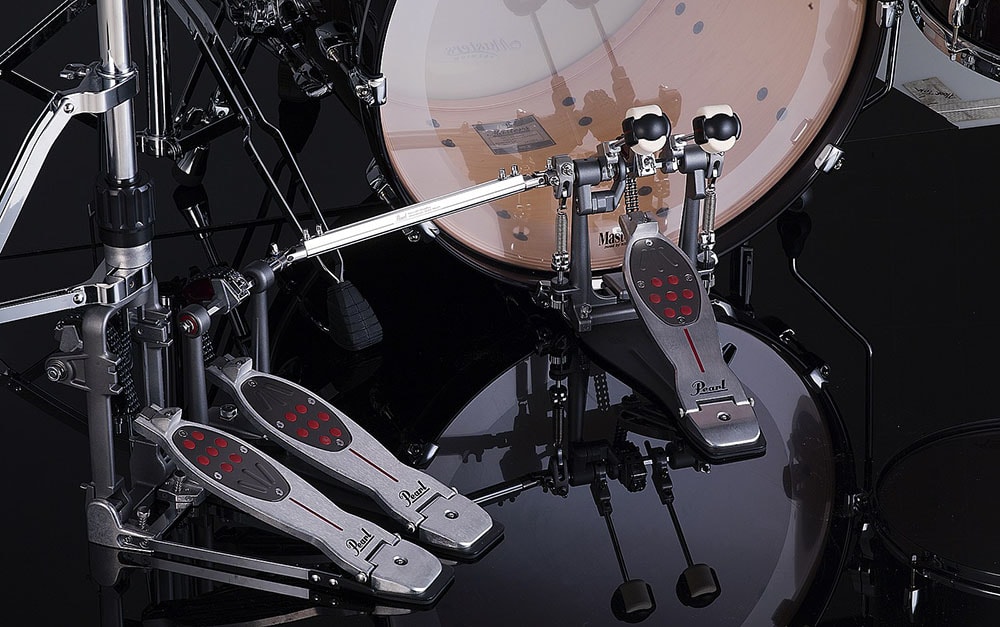
Basically, double bass pedals work in the same way as single bass pedals, but there are certain differences. By applying pressure to the footpad, the drummer triggers the spring mechanism, which results in the beater motion.

Simply speaking, the main method of operation of double bass pedals is the same, with the addition of another pedal, hence another beater. Each pedal is responsible to a single beater. The pedals are connected, but the method of operation relies on physics alone — pulling the weight downward results in pushing the beater outward.

 Adjusting And Setting Up The Double Bass Pedal

Even though most double bass pedals come with a set of instructions or a manual which explain the process, some beginners simply don’t find them helpful.

Why is that? Due to the fact that there are various ways to adjust and setup your double bass pedal, most people don’t get it right the first time. Anyhow, we will provide a short walkthrough on how to do it easily.

Setup

Different double bass pedals require a different setup process. This process is usually defined by the manufacturer in the “instructions manual” or the “user’s guide”.

If you’re not interested in reading how to setup your double bass pedal, you can always skip to the video lesson here:

Recommended Adjustments and Settings

Try to keep the beaters pretty far back for example about a sixty-degree angle. To give a really defined beat. If you try to cheat keeping the beaters really close to drum head you’ll lose a lot of tension-producing a weak beat.

Another great setting is to use a max spring tension to get the fastest response time on your pedal. We’re trying to maximise on the return of each bass drum stroke.

If you have super loose tension your beater is going to pull back after each bass drum stroke with less energy. The higher your spring tension the faster and farther back your beater is going to get.

Which means with each successive hit you’re going to have a consistent power with each bass drum stroke.

A lot of drummers don’t know this super simple technique. The main thing you should try to achieve is matching the tension on your primary pedal to the tension on your slave pedal. Because you need to compensate for all the extra mass.

All you need to do to catch your bearings or see if you’re in a good place is make sure your pedals are secure to the ground and are not going to shake around and soak up any of that extra movement. Then bring your beaters to the head with the same hand and then just release them at the same time.

Take your feet off the pedals and they should recoil pretty in sync.

The longer you can keep them in sync the closer together your spring tensions are. Your right pedal is always going to last longer, the slave is always going to die out faster for all the extra mass. As long as you have the first four or five recoil swings in sync you’re going to be in good shape.

If they don’t match just tightening up the tension to get them even.

With these settings, you can definitely be sure you’re going to have a comfortable pedal to play with.

Conclusion

Choosing the right double bass pedal is a journey unique to each drummer. Remember, what resonates with one musician might not hit the right note for another.

It’s essential to understand your preferences in terms of pedal feel, response, and sound. The diverse range of customization options available in double pedals allows for a personalized drumming experience, so take your time to explore these features.

Playing double bass drum patterns is not just about technical prowess; it’s an exhilarating way to express your musicality. Investing in a quality double pedal is a decision you’re unlikely to regret, as it opens new horizons in your drumming journey.

Our guide aims to help you navigate through these choices with confidence. And if you’re delving deeper into the world of percussion, don’t miss our comprehensive articles on electronic drum kitsbeginner drum sets  and cymbal packs. Each piece is crafted to enhance your understanding and help you make informed decisions, ensuring your drumming path is both rewarding and fun.

Brett Clur has a Drum Performance Diploma from Trinity College London  has been playing drums for over 20 years. He is passionate about advanced concepts and uses his years of experience to teach his students about them. While he is a full-time drum teacher, he is also working on growing a YouTube channel where shares his insights. You can see him playing there, or on Instagram where he posts daily videos.

Pin It on Pinterest

Share This

Wait! Download Our Free eBook Now!

free-drum-sheet-music

Wait! Download Our Free eBook Now!

Enter your name and email below to get instant access to our FREE eBook, “9 Powerful Tips To Get Faster On The Drums (And The Mistakes To Avoid!)”

Where Do We Send Instant Access?

free-drum-sheet-music

Where Do We Send Instant Access?

Enter your name and email below to get instant access to our FREE eBook,
“9 Powerful Tips To Get Faster On The Drums (And The Mistakes To Avoid!)”